Get 20% off for Next 3 days...
What PPE Is Safe for Electrical and Maintenance Technicians in Qatar?
Learn which PPE is safe for electrical and maintenance technicians in Qatar. A complete guide to certified gear, standards, and protection in local conditions.
12/9/20254 min read

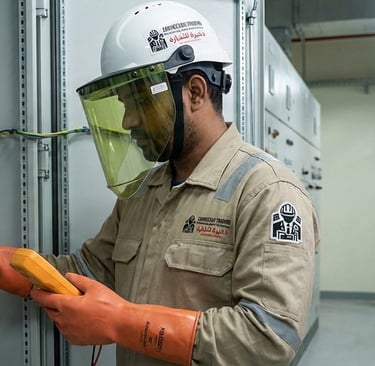
Electrical technician in Qatar wearing certified PPE for high-risk maintenance tasks.
What PPE Is Safe for Electrical and Maintenance Technicians in Qatar?
Electrical and maintenance technicians work in some of the most hazardous environments in Qatar’s industrial, commercial, and construction sectors. Whether repairing distribution boards, maintaining HVAC systems, installing wiring, or performing live testing, workers face constant electrical risks. Without the correct protection, even a minor mistake can lead to burns, shocks, arc-flash injuries, or fatal accidents. That is why certified personal protective equipment Qatar is essential for every electrical task.
This complete guide explains the safest PPE for electrical and maintenance technicians, the standards required in Qatar, and how PPE Qatar helps reduce workplace risks.
Why Electrical PPE Is Critical in Qatar’s Workplaces
Qatar’s electrical technicians often work in conditions where risks are unpredictable. Job sites include:
Industrial plants
High-rise buildings
Construction sites
MEP installations
Qatar Energy & utility facilities
Maintenance workshops
Outdoor electrical cabins in extreme heat
Electrical work in these areas exposes workers to several hazards such as:
Electric shock
Arc flash and arc blast
Burns and fire hazards
Explosions from short circuits
High temperatures in Qatar’s climate
Dust contamination in electrical equipment
Slips and falls while working on elevated systems
Because of these risks, the use of certified safety equipment Qatar becomes a legal and operational requirement.
Essential PPE for Electrical Technicians in Qatar
Below are the core PPE categories electrical and maintenance technicians must use. This list follows typical Qatar safety standards used by contractors, government bodies, and private industry.
1. Insulated Electrical Gloves
These gloves are the most critical component of personal protective equipment Qatar for electrical jobs.
Electrical gloves protect against:
Shock
Live contact
Arc flash exposure
The gloves must be:
Tested and certified
Rated for specific voltage levels
Paired with leather protectors
Working without proper insulation can result in life-threatening injuries.
2. Arc-Rated (AR) Clothing
Arc-rated clothing prevents burns caused by electrical arc flash explosions.
This includes:
Arc-rated shirts
Arc-rated pants
Coveralls
Jackets
These garments are made of flame-resistant materials designed to self-extinguish. Using AR clothing is mandatory in most high-risk maintenance tasks under PPE Qatar regulations.
3. Dielectric Safety Boots
Electricians in Qatar must wear safety boots designed to resist electrical conductivity.
Good electrical boots offer:
Dielectric resistance
Slip-resistant soles
Shock absorption
Heat protection
In Qatar’s outdoor environments, these boots also help prevent heat-related foot injuries.
4. Electrical Safety Helmet (Dielectric Helmet)
A standard hard hat is not enough for electrical work. Electrical technicians must use Class E or dielectric helmets to prevent:
Electrical shock
Falling object impact
Arc flash injuries
These helmets are engineered to withstand up to 20,000 volts.
5. Arc Flash Face Shield or Hood
For tasks near energized equipment, workers need arc flash face protection like:
Arc-rated face shields
Arc flash hoods
Full helmets with chin protection
These shields block sparks, flash, and radiated heat.
6. Safety Glasses
Electrical technicians must wear impact-resistant glasses even under face shields.
They protect against:
Flying debris from panels
Dust
Small metal particles
Wire ends or sparks
Qatar’s dusty climate makes this safety equipment Qatar essential.
7. Hearing Protection
Arc flash events can create shock waves louder than a jet engine. Technicians must use:
Industrial earplugs
Noise-blocking earmuffs
Especially in industrial areas with machinery running constantly.
8. Respiratory Protection (If Needed)
Maintenance technicians often deal with dusty rooms, chemical fumes, or confined spaces.
Respiratory PPE includes:
Dust masks
Half-face respirators
Gas filter masks
This protects against lung irritation and toxic particle exposure.
PPE Standards Required for Electrical Work in Qatar
Qatar follows strict international safety standards for all electrical PPE. Common compliance requirements include:
NFPA 70E (Electrical Safety in the Workplace)
ASTM standards for arc-rated clothing
IEC and EN standards for electrical gloves
OSHA regulations for electrical safety
CE marking for compliance
Using non-certified PPE Qatar increases the risk of hazardous incidents and legal penalties.
How PPE Protects Electrical Technicians from Key Hazards
Shock Protection
Insulated gloves and dielectric boots prevent dangerous current flow through the body.
Burn Protection
Arc-rated clothing reduces burn severity in case of flash explosions.
Head and Eye Safety
Dielectric helmets and face shields protect against impact, heat, and radiation.
Respiratory Protection
Masks filter dust and prevent inhalation of harmful particles inside electrical rooms.
Slip and Fall Prevention
Safety boots ensure stability in Qatar’s dusty and sometimes greasy industrial floors.
Common PPE Mistakes to Avoid in Qatar
Electrical technicians must avoid:
Using gloves with holes or cracks
Wearing metal accessories near panels
Using non-arc-rated clothing
Working with expired PPE
Wearing synthetic fabrics that melt under heat
Using ordinary hard hats instead of dielectric helmets
Skipping face protection during live testing
These mistakes are among the most common reasons accident reports increase in Qatar’s industrial sector.
How Qatar’s Climate Affects Electrical PPE
Qatar’s hot and humid conditions require extra PPE precautions:
Sweat can reduce glove insulation → gloves must be checked frequently
High temperatures require breathable arc-rated fabrics
Dust can damage electrical components → technicians need extra eye protection
Sun exposure makes helmets hot → cooling pads or ventilation is important
Choosing climate-friendly personal protective equipment Qatar helps maintain comfort and safety.
Maintaining PPE for Electrical Work in Qatar
To keep equipment safe:
Gloves must be voltage-tested periodically
Helmets should be replaced if cracked or old
Face shields must be cleaned and scratch-free
Arc-rated clothing must be washed correctly
Boots should be inspected for sole damage
All tools must remain insulated and certified
PPE maintenance directly impacts worker safety.
Conclusion
Electrical and maintenance technicians face some of the highest safety risks in Qatar’s industrial and commercial sectors. Using certified PPE Qatar is the most effective way to reduce accidents, prevent electrical shocks, and stay compliant with national regulations.
From insulated gloves and dielectric helmets to arc-rated clothing and safety boots, every piece of personal protective equipment Qatar plays a critical role. Companies that invest in high-quality safety equipment Qatar protect their workers, reduce downtime, and support a safer working environment across the country.
Safety
Your trusted supplier of quality safety equipment.
Contact
Service
info@zakheerah.qa
© 2025. All rights reserved.
CR No: 194474