Get 20% off for Next 3 days...
Hazardous Environment Safety in Qatar – Complete Guide
Learn essential hazardous environment safety practices in Qatar, including PPE, regulations, and tips to protect workers in high-risk industries.
12/9/20251 min read
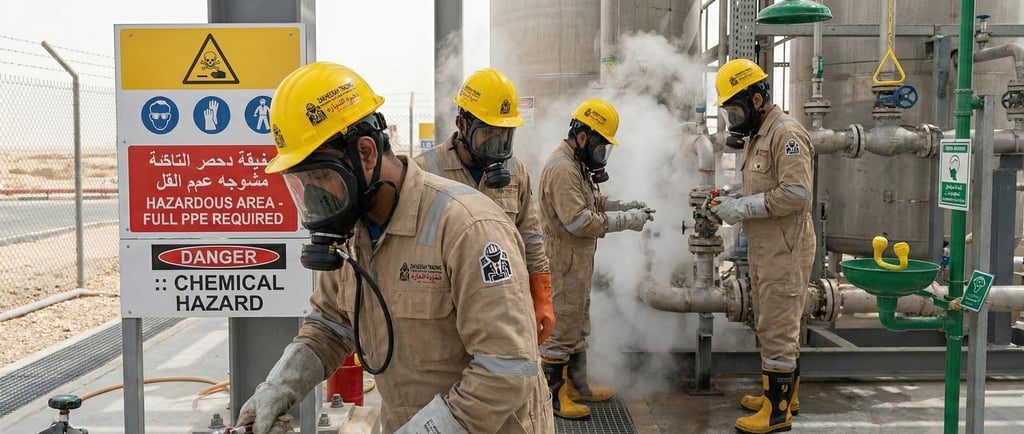
Workers in Qatar equipped with proper PPE to ensure hazardous environment safety.
Hazardous Environment Safety in Qatar – Complete Guide
Hazardous environments are common across Qatar’s oil, gas, construction, and industrial sectors. Working in these high-risk areas exposes employees to toxic gases, extreme heat, fire, chemical spills, and heavy machinery accidents. Ensuring hazardous environment safety in Qatar is crucial for protecting workers and maintaining compliance with local regulations.
What Is a Hazardous Environment?
A hazardous environment refers to workplaces where injury, illness, or fatality risks are high. Examples include:
Flammable or explosive areas
Chemical handling zones
Confined spaces
High-noise or high-temperature sites
Heavy machinery zones
In Qatar, such environments are widespread in construction projects, refineries, industrial plants, and shipyards.
Regulatory Standards for Hazardous Environments in Qatar
Qatar enforces strict safety regulations through:
Ministry of Labour – Qatar
Qatar Energy safety standards
Qatar Construction Safety Standards (QCS)
Employers are required to provide:
Risk assessments
Worker safety training
Proper PPE
Emergency response protocols
Ignoring these rules can lead to fines, legal action, or project shutdowns.
Essential Safety Practices
Conduct daily site inspections
Install clear warning signs for hazard zones
Ensure proper chemical storage
Maintain ventilation systems
Provide emergency showers and eye wash stations
Obtain hot work permits before welding or cutting
Mandatory PPE in Hazardous Environments
To safeguard workers in Qatar, the following PPE is essential:
Safety helmets with face shields
Flame-resistant (FR) clothing
Steel-toe boots
Chemical-resistant gloves
Respirators or self-contained breathing apparatus (SCBA)
Ear protection for high-noise zones
Proper PPE reduces the risk of serious injuries and fatalities in hazardous areas.
High-Risk Industries in Qatar
Industries where hazardous environment safety is critical include:
Oil and gas sector
Construction projects
Power plants and refineries
Chemical factories
Shipyards and ports
These sectors follow safety audits, toolbox talks, and emergency drills regularly.
Why Hazardous Environment Safety Matters
Maintaining safety in hazardous workplaces ensures:
Reduced workplace accidents
Protection of manpower
Compliance with legal standards
Enhanced productivity
Protection of company reputation
A strong safety culture is vital for long-term operational success in Qatar.
Conclusion
Hazardous environment safety is non-negotiable for any company operating in high-risk industries in Qatar. By enforcing regulations, providing the right PPE, and following safety protocols, businesses can protect workers, avoid legal issues, and maintain efficient operations.
Remember: Safety is not just compliance—it’s a responsibility. Every worker in Qatar deserves a safe work environment.
Safety
Your trusted supplier of quality safety equipment.
Contact
Service
info@zakheerah.qa
© 2025. All rights reserved.
CR No: 194474