Get 20% off for Next 3 days...
Latest PPE Standards and Safety Regulations in Qatar Explained for Businesses
Learn the latest PPE standards and safety regulations in Qatar for businesses. Understand compliance, certifications, and legal requirements for workplace protection.
12/13/20254 min read
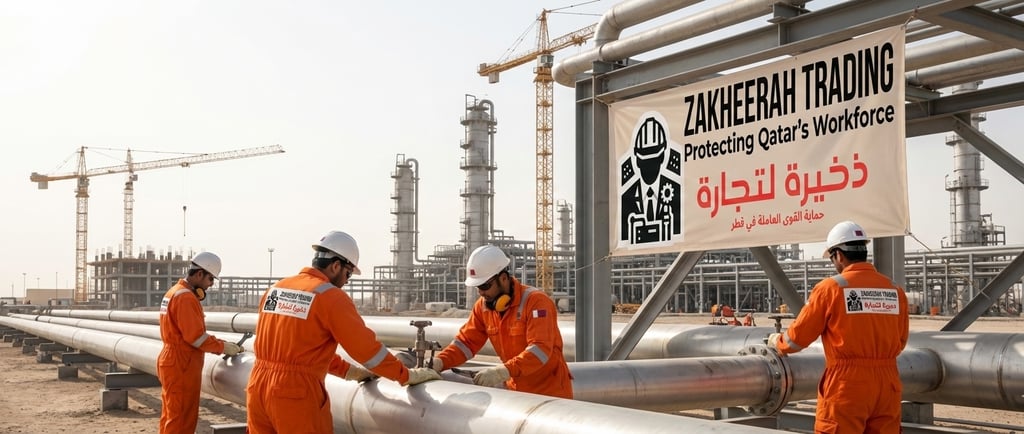
Business safety officers check PPE compliance with Qatar standards on site.
Latest PPE Standards and Safety Regulations in Qatar Explained for Businesses
In today’s rapidly developing economy, PPE Qatar standards and safety regulations are a key concern for businesses across construction, manufacturing, and especially the oil & gas sector. For companies that manage large teams, operate heavy machinery, or work in hazardous environments, understanding the latest PPE standards and safety regulations in Qatar is essential to protect employees, satisfy clients, and comply with legal requirements.
This comprehensive guide explains the current regulations, industry standards, compliance expectations, and how business owners and procurement teams can work effectively with reliable PPE supplier Qatar partners to ensure safety, quality, and legal compliance.
Why PPE Standards and Safety Regulations Matter in Qatar
Qatar is home to some of the most demanding industrial projects in the world — from oil and gas facilities to large infrastructure developments and high-rise construction. Operating under extreme heat, potentially explosive atmospheres, and environments with high dust and chemical exposure makes worker safety a constant priority.
Regulated workplace safety standards ensures that:
Workers are protected from injuries and occupational hazards
Businesses comply with Qatar Labor Law and industry requirements
Employers avoid penalties and legal liabilities
Workplace incidents are reduced
Operational productivity and worker morale improve
Failure to follow the latest PPE standards and safety regulations in Qatar can lead to fines, project delays, shutdowns, and legal liabilities — especially in highly regulated sectors such as oil & gas and industrial manufacturing.
Core Regulatory Bodies & Frameworks in Qatar
In Qatar, workplace safety, including the use of personal protective equipment, is governed by multiple authorities and frameworks that specify how PPE should be selected, used, and maintained.
1. Qatar Ministry of Labour (MOL)
The MOL enforces general workplace safety rules that require employers to provide proper PPE, conduct risk assessments, and train workers on safe use of equipment.
2. Qatar Construction Specifications (QCS)
For construction projects, the QCS outlines mandatory PPE requirements depending on job type, exposure level, and site hazards.
3. Industry-Specific Authorities
Highly regulated sectors like oil & gas follow additional safety requirements set by:
Qatar Petroleum (QP)
Ras Laffan Operating Companies
Ministry of Municipality and Environment (for chemical handling)
These agencies often adopt or align with international standards to ensure global compliance for foreign contractors operating in Qatar.
Key International Standards Adopted in Qatar
To ensure consistency and reliability, Qatar’s PPE regulations often follow internationally recognized standards. These standards define how personal protective equipment should perform under specific conditions.
ISO Standards
Used for quality management and testing protocols, including:
ISO 9001 — quality assurance for PPE manufacturing
ISO 11611/11612 — protective clothing for welding and heat exposure
EN (European Norm) Standards
Common for industrial PPE including:
EN 397 — safety helmets
EN 166 — eye protection
EN 388 — protective gloves
EN 20345 — safety footwear
ANSI and ASTM Standards (USA)
Often used in technical sectors:
ANSI Z87.1 — safety glasses
ASTM F2413 — protective footwear performance
OSHA Guidelines
Although Qatar has its own regulations, many companies reference OSHA standards (Occupational Safety and Health Administration) to maintain global best practices, especially in oil & gas and manufacturing sectors.
Mandatory PPE Requirements for Qatar Workplaces
Across most workplaces in Qatar, safety regulations require employers to provide appropriate PPE based on risk assessment. These include:
1. Head Protection
Safety helmets with certification must be worn by personnel on construction sites, maintenance areas, and industrial zones.
2. Eye and Face Protection
Certified goggles and face shields are required for jobs involving dust, flying debris, chemicals, or arc welding.
3. Hand Protection
The right gloves must be provided for handling chemicals, sharp materials, hot components, and electrical systems.
4. Foot Protection
Safety boots with steel or composite toes, anti-slip soles, and heat resistance are required in most industrial settings.
5. Respiratory Protection
Masks, respirators, or supplied-air systems are mandatory in environments with dust, fumes, or airborne contaminants.
6. Hearing Protection
Industrial earplugs and earmuffs are required in high-noise areas such as manufacturing floors and heavy machinery zones.
7. High-Visibility and Specialty Clothing
Reflective clothing for road works and flame-resistant clothing for welding or oil & gas operations.
How Businesses Can Ensure Compliance with PPE Standards
A compliant organization must follow a structured approach to PPE implementation:
1. Conduct Risk Assessments
Every job site must undergo a detailed risk assessment to determine:
Types of hazards present
Required level of protection
Specific PPE standards to apply
A thorough assessment ensures the right PPE Qatar equipment is selected.
2. Select Certified PPE
Work only with reputable PPE supplier Qatar companies that provide certified products. Always verify:
EN/ISO/ANSI/ASTM certifications
CE/ISO markings
Product test reports
Manufacturer documentation
Certified PPE provides dependable protection and helps satisfy regulatory inspections.
3. Train Employees
Proper training ensures workers know:
How to wear PPE correctly
How to inspect PPE before each use
How to store and maintain equipment
When to replace faulty or expired PPE
Employers should document training programs to support workplace audits.
4. Maintain PPE Records
Keep accurate documentation for all provided safety equipment, including:
Supplier information
Certification documents
Inspection reports
Replacement logs
These records are crucial for compliance audits and safety reviews.
5. Regular Inspections and Audits
Scheduled PPE audits help detect:
Damaged equipment
Expired gear
Improper use
Non-compliance trends
Proactive inspection reduces risks and avoids penalties.
Penalties for Non-Compliance in Qatar
Companies that fail to follow the latest PPE standards and safety regulations in Qatar may face:
Monetary fines
Work stoppages or suspension
Project delays
Legal liabilities
Damage to company reputation
This is especially true in highly regulated environments like oil & gas and industrial sectors where safety standards are strictly enforced.
Benefits of Complying with Qatar’s PPE Regulations
Following the right PPE Qatar compliance approach offers significant advantages:
✔ Improved worker health and safety
✔ Reduced workplace injuries and lost time
✔ Enhanced productivity
✔ Lower insurance and compensation costs
✔ Stronger legal and regulatory standing
✔ Better reputation with clients and partners
A proactive safety strategy protects workers and protects your business.
Conclusion
Understanding the latest PPE standards and safety regulations in Qatar is essential for any business operating in hazardous or industrial environments. Compliance isn’t just about following rules—it directly impacts your workforce’s safety and your company’s operational success. By working with certified PPE suppliers in Qatar, conducting risk assessments, training staff, and maintaining proper documentation, businesses can ensure safe, productive, and compliant workplaces.
Whether you are in construction, oil & gas, manufacturing, or maintenance, prioritizing PPE Qatar safety regulations protects people first — and your business second.
Safety
Your trusted supplier of quality safety equipment.
Contact
Service
info@zakheerah.qa
© 2025. All rights reserved.
CR No: 194474