Get 20% off for Next 3 days...
Qatar Construction Site Safety Standards – Essential Rules for Workers
Learn Qatar’s construction site safety standards, mandatory PPE rules, hazard controls, and worker protection guidelines to ensure safe and compliant project operations.
12/11/20253 min read
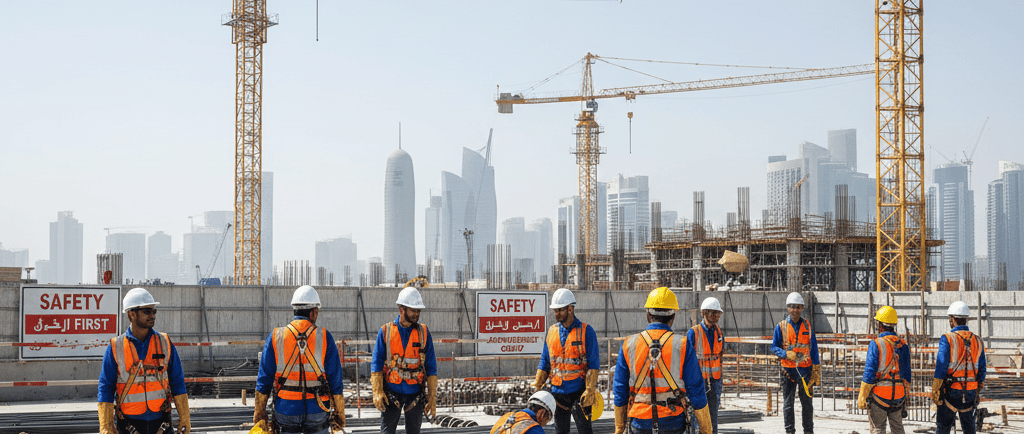
Construction workers in Qatar following safety standards with full PPE
Qatar Construction Site Safety Standards – Essential Rules for Workers
Qatar’s construction industry is one of the fastest growing in the region, driven by rapid infrastructure development, smart city projects, and expansions across transportation, energy, and commercial sectors. With this growth comes a strong emphasis on workplace safety. Construction sites naturally involve high-risk activities—from working at height to handling heavy machinery—and complying with Qatar’s safety regulations is not only a legal requirement but a moral responsibility.
This guide explains the key construction site safety standards every worker and employer must follow in Qatar, including PPE use, hazard identification, training, site management, and emergency response planning.
Why Construction Safety Matters in Qatar
Safety standards are designed to prevent common construction accidents such as falls, electrical shocks, struck-by hazards, chemical exposure, and equipment failures. These rules help reduce injuries, protect workers’ lives, and ensure projects stay on schedule without legal penalties.
Qatar’s Ministry of Labour, along with organizations like Qatar Construction Specifications (QCS) and Qatar Energy for industrial zones, enforces strict HSE (Health, Safety, and Environment) requirements. Workplaces that fail to meet compliance face fines, shutdowns, or workforce suspension.
1. Mandatory PPE for Construction Workers in Qatar
Personal Protective Equipment (PPE) is the first line of defense on any construction site. Every worker must wear properly certified equipment according to the job task and environment.
Essential PPE Includes:
Safety helmets – protects from falling objects or head injuries
Steel-toe safety boots – guards against foot impact hazards
Reflective high-visibility vests – improves visibility around moving machinery
Safety gloves – cuts, abrasion, and chemical protection
Safety goggles or face shields – eye protection from dust, debris, sparks
Ear protection – required in high-noise areas
Respirators or masks – for dust, fumes, vapors, and confined spaces
Specialized PPE such as full-body harnesses, fire-resistant clothing, and chemical-resistant suits may be required depending on the activity.
2. Working at Height Regulations
Falls are the leading cause of construction accidents in Qatar. Safety rules emphasize prevention through:
Proper use of safety harnesses
Certified anchor points
Guardrails on elevated platforms
Scaffolds erected by trained personnel
Regular equipment inspections
Prohibition of working at height during strong winds or storms
No worker should be allowed on elevated structures without full fall-protection compliance.
3. Machinery and Equipment Safety
Construction sites rely heavily on heavy machinery such as cranes, forklifts, compactors, and excavators. Qatar’s safety standards include strict guidelines for:
Operator licensing and training
Daily equipment inspections
Safe lifting limits
Warning signals and spotters
Clear communication between crane operators and ground workers
Lock-out/tag-out procedures during maintenance
Unauthorized or untrained individuals must never operate machinery.
4. Electrical Safety Standards
Energy-related hazards can lead to fires, shocks, and severe injuries. Compliance includes:
Use of insulated tools
Ground-fault circuit interrupters (GFCIs)
Waterproof coverings for exposed wires
Only certified electricians performing electrical work
Regular testing of cables and control panels
No temporary connections without approval
Disconnecting power before repairs is mandatory.
5. Site Housekeeping and Hazard Control
A clean, organized site dramatically reduces accidents. Qatar’s regulations require:
Clearly marked walking paths
Proper storage of materials
Immediate cleanup of spills
Waste disposal in designated containers
Adequate lighting for night shifts
Barricading of hazardous zones
Good housekeeping is a daily requirement, not an occasional task.
6. Heat Stress Prevention in Qatar’s Climate
Qatar’s extreme summer temperatures create high risks of heat stress, dehydration, and exhaustion. Safety rules include:
Mandatory shaded rest areas
Adequate drinking water supply
Work-rest cycles during peak heat
Training workers to recognize early signs of heatstroke
Compliance with the “midday outdoor work ban” during summer months
Worker health must always take priority over work deadlines.
7. Safety Training and Competency Requirements
Workers, supervisors, and safety officers must undergo certified training programs such as:
Basic HSE induction
Fire safety
First aid
Working at height
Scaffold safety
Confined space entry
Machinery operation training
Only trained individuals should perform specialized tasks.
8. Emergency Preparedness on Construction Sites
Construction sites must have clear emergency procedures that include:
Fire evacuation plans
Marked assembly points
First-aid kits and certified first-aiders
Emergency contact boards
Rescue plans for high-risk tasks
Fire extinguishers and detectors
Regular drills help workers respond quickly during real emergencies.
Conclusion
Construction safety in Qatar is built on discipline, awareness, and compliance. When workers follow PPE rules, risk controls, and training standards, the entire site becomes safer and more efficient. Employers must prioritize HSE policies and invest in proper equipment, while workers must follow procedures without shortcuts.
Strong safety standards protect lives—and successful projects are always built on a safe foundation.
Safety
Your trusted supplier of quality safety equipment.
Contact
Service
info@zakheerah.qa
© 2025. All rights reserved.
CR No: 194474