Get 20% off for Next 3 days...
Qatar Energy HSE Standards – Safety Rules Every Workplace Must Follow
Discover Qatar Energy HSE standards and essential safety rules every workplace must follow to ensure compliance, worker protection, and safe industrial operations.
12/11/20253 min read
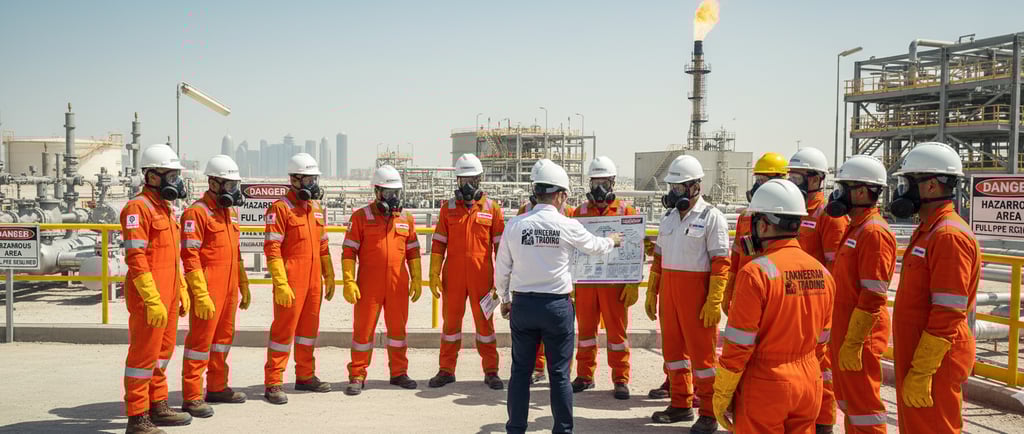
Workers in Qatar follow essential Qatar Energy HSE safety rules daily.
Qatar Energy HSE Standards – Safety Rules Every Workplace Must Follow
Health, Safety, and Environment (HSE) standards are the backbone of safe operations in Qatar’s fast-growing energy and industrial sectors. QatarEnergy, the state-owned energy company, has developed one of the most advanced HSE frameworks in the region. These guidelines ensure that workers stay safe, equipment stays reliable, and workplaces remain compliant with Qatar’s national safety requirements.
Whether your company works in construction, oil & gas, manufacturing, maintenance, or engineering, understanding Qatar Energy HSE standards is essential. This guide explains the safety rules every workplace must follow, the required PPE, training expectations, and compliance roadmap for 2025.
What Are Qatar Energy HSE Standards?
Qatar Energy HSE Standards provide a structured set of rules designed to:
Prevent workplace injuries
Reduce operational risks
Protect workers and the environment
Improve safety competency
Ensure safe and sustainable project execution
These standards apply to all contractors, subcontractors, suppliers, and employees working under QatarEnergy projects.
Why HSE Standards Matter in Qatar
Qatar’s industrial sectors involve high-risk activities such as:
Hydrocarbon processing
Heavy equipment handling
Chemical transferring
Welding and hot work
Lifting operations
Confined space entry
To manage these risks, QatarEnergy enforces strict HSE rules that help:
Save lives
Avoid major accidents
Prevent environmental pollution
Strengthen safety culture
Workplaces that follow these standards perform safer and operate more efficiently.
Core Components of Qatar Energy HSE Standards
1. Risk Assessment & Hazard Control
Every task must begin with a Hazard Identification and Risk Assessment (HIRA). Workers must identify:
Hazard sources
Potential consequences
Risk level
Control measures
A Job Safety Analysis (JSA) is mandatory for medium and high-risk tasks.
2. Permit to Work (PTW) System
High-risk activities require a PTW, such as:
Hot work (welding, cutting)
Electrical work
Confined space entry
Excavation
Lifting operations
Radiography work
A PTW ensures all safety checks are completed before work starts.
3. Workplace PPE Requirements
Qatar Energy requires the following PPE as minimum:
Safety helmets
FR (Flame-Resistant) coveralls
Safety boots (S3 standard)
Gloves suitable for the job
Safety goggles or face shields
Ear protection for high-noise zones
Additional PPE for hazardous tasks includes:
SCBA or respirators
Chemical-resistant suits
Arc flash protective gear
Fall arrest harnesses
PPE must be inspected daily.
4. Worker Safety Training & Competency
Workers must be trained and certified in:
HSE awareness
H2S safety
First aid
Fire warden and fire-fighting basics
Hazard communication
Permit-to-work procedures
Equipment operation
No one may perform a job without proper competency.
5. Equipment Certification & Inspection
All tools and machinery must be:
Inspected regularly
Tagged for safety
Maintained properly
Used only by certified operators
This includes cranes, forklifts, electrical tools, gas detectors, and lifting gear.
6. Emergency Preparedness
Every workplace must have:
Fire extinguishers
Muster points
Emergency response plans
Spill kits
First-aid stations
Alarm systems
Evacuation routes
Emergency drills must be conducted regularly.
7. Environmental Protection Rules
QatarEnergy requires companies to control:
Waste disposal
Emission levels
Chemical storage
Hazardous material handling
Water discharge
Environmental safety is a major part of HSE compliance.
Must-Follow Safety Rules for Every Workplace
Here are the most important safety rules Qatar Energy expects all workers and contractors to follow:
✔ Always wear PPE
No worker enters a jobsite without full PPE.
✔ Follow the Permit to Work system
Never begin high-risk tasks without an approved permit.
✔ Keep work areas clean
Good housekeeping reduces injuries.
✔ Use tools correctly
Never bypass equipment safety systems.
✔ Report hazards immediately
Workers must inform supervisors about unsafe conditions.
✔ Attend toolbox talks
Daily morning briefings ensure everyone understands task risks.
✔ Stop unsafe work
Workers have full authority to stop any unsafe activity.
Qatar Energy HSE Compliance Checklist (2025 Updated)
Before Work
Complete risk assessment
Wear correct PPE
Inspect tools and equipment
Check gas detectors
Review PTW requirements
Conduct toolbox talk
During Work
Follow supervisor instructions
Maintain safe distance from hazards
Use fall protection when needed
Keep communication open
Avoid shortcuts
After Work
Close PTW
Dispose of waste properly
Store tools correctly
Report any incidents
Update safety records
Benefits of Following Qatar Energy HSE Standards
When workplaces follow these rules, they achieve:
Lower accident rates
Higher worker productivity
Increased project efficiency
Stronger contractor reputation
Compliance with government laws
Safer and sustainable operations
Companies that meet Qatar Energy’s HSE expectations are preferred for major contracts.
Conclusion
Qatar Energy HSE Standards are not optional—they are essential for ensuring worker safety and protecting Qatar’s industrial environment. By following the right PPE requirements, using the Permit to Work system, conducting proper risk assessments, and maintaining strong emergency readiness, workplaces can operate safely and efficiently.
Every worker and every employer must commit to applying these rules daily. A safe workplace is a productive workplace—and Qatar Energy’s HSE standards make that possible.
Safety
Your trusted supplier of quality safety equipment.
Contact
Service
info@zakheerah.qa
© 2025. All rights reserved.
CR No: 194474