Get 20% off for Next 3 days...
Qatar Energy Safety Standards – Complete Compliance Guide for 2025
Learn Qatar Energy safety standards, compliance rules, PPE requirements, and HSE guidelines essential for safe operations across Qatar’s industrial and oil & gas sectors.
12/10/20253 min read
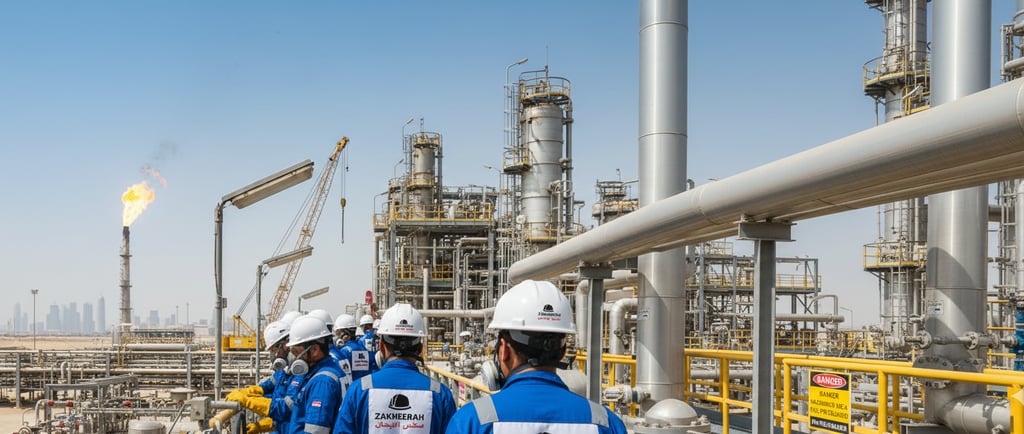
Workers in Qatar follow Qatar Energy safety standards for safe operations.
Qatar Energy Safety Standards – Complete Compliance Guide for 2025
Qatar’s industrial growth relies heavily on strong safety systems, especially within the oil, gas, and energy sectors. QatarEnergy—the state-owned petroleum company—sets some of the strictest and most comprehensive safety standards in the region. Following these standards is essential for ensuring workplace safety, preventing accidents, and maintaining compliance across all industrial operations.
This guide breaks down the key requirements, PPE rules, hazard control measures, and the full compliance roadmap for 2025. Whether you’re a contractor, HSE officer, or worker, understanding Qatar Energy safety standards ensures that every task is performed safely and responsibly.
What Are Qatar Energy Safety Standards?
Qatar Energy Safety Standards (QESS) are a set of Health, Safety, and Environment (HSE) rules and procedures designed to:
Protect workers
Prevent industrial accidents
Reduce environmental risks
Maintain safe project execution
Ensure responsible energy production
These standards align with global safety frameworks such as ISO 45001 and international oil & gas practices.
Why These Standards Matter in Qatar
The energy sector involves high-risk operations such as drilling, refining, chemical handling, high-pressure systems, confined spaces, and hazardous gases. QatarEnergy established these standards to:
Provide clear safety expectations for all contractors
Minimize injuries and worksite incidents
Improve worker training and certification
Protect critical infrastructure
Ensure long-term operational sustainability
Companies operating under QatarEnergy must strictly follow these rules or risk penalties, suspension, or removal from approved contractor lists.
Core Elements of Qatar Energy Safety Standards
1. Hazard Identification & Risk Assessment (HIRA)
Before any task begins, a complete risk assessment must identify:
Potential hazards
Risk level
Controls needed
Worker protection requirements
Every job requires a Job Safety Analysis (JSA).
2. Permit to Work (PTW) System
Certain high-risk activities require official work permits, including:
Hot work
Electrical work
Confined space entry
Work at height
Excavation
Lifting operations
A PTW ensures all conditions are safe before work begins.
3. Mandatory Training & Competency Requirements
Workers must be trained and certified in:
H2S awareness
Fire safety
First aid
Confined space entry
PPE usage
Emergency evacuation
Only trained personnel can operate equipment or handle chemicals.
4. Mandatory PPE Requirements
Qatar Energy specifies strict PPE rules depending on the job. Basic PPE includes:
Safety helmet
FR (Flame-Resistant) coveralls
Safety boots (S3 certified)
Gloves (task-specific)
Safety glasses or goggles
Hearing protection in noisy areas
For high-risk areas:
Respirators or SCBA
Chemical-resistant suits
Arc flash protection
Fall arrest systems
5. Equipment Safety & Inspection
All equipment must be:
Certified
Inspected
Maintained
Tagged for safety
This includes cranes, forklifts, gas detectors, fire extinguishers, SCBA units, and electrical tools.
6. Emergency Response Planning
Every facility must have:
Emergency evacuation routes
Muster points
Fire suppression systems
Medical response teams
Spill response kits
Incident reporting procedures
Regular drills are mandatory.
7. Environmental Protection Standards
QatarEnergy also focuses on sustainability. Companies must manage:
Waste control
Water discharge
Air emissions
Chemical storage
Hazardous material handling
Clean operations reflect Qatar’s commitment to environmental care.
Key Safety Rules Workers Must Follow
QatarEnergy requires workers to:
Report unsafe conditions immediately
Wear PPE at all times
Follow supervisor instructions
Never bypass safety systems
Use tools and equipment properly
Participate in toolbox talks
Every worker is responsible for their own safety and the safety of their team.
Contractor Responsibilities Under Qatar Energy Standards
Contractors must ensure:
All workers are trained
PPE is provided and inspected
Safety officers are present
JSA and PTW are completed
Equipment is tagged and certified
Incident reports are documented
Failure to meet standards can lead to contract termination.
Qatar Energy Compliance Checklist (2025 Updated)
Use this checklist to ensure full compliance:
✔ Before Work Begins
Conduct risk assessment
Complete toolbox talk
Verify PPE compliance
Check equipment certification
Review PTW requirements
✔ During Work
Maintain supervision
Monitor gas levels
Keep workspace clean
Use PPE correctly
Follow safe lifting & movement procedures
✔ After Work
Close PTW
Remove waste properly
Store equipment safely
Report any incidents
Update safety logs
This checklist keeps operations aligned with Qatar Energy expectations.
Benefits of Following Qatar Energy Safety Standards
Fewer accidents
Improved worker safety
Higher productivity
Stronger company reputation
Better contract approval chances
Long-term operational stability
Companies that follow these standards build trust with Qatar Energy and ensure safe, successful project delivery.
Conclusion
Qatar Energy safety standards are essential guidelines that help protect workers, reduce risks, and ensure smooth operations across Qatar’s industrial and energy sectors. By following training requirements, wearing proper PPE, conducting risk assessments, and maintaining strong emergency readiness, companies can create safer workplaces and meet Qatar’s high safety expectations.
Stay compliant, stay safe, and ensure your team follows the proper procedures every day.
Safety
Your trusted supplier of quality safety equipment.
Contact
Service
info@zakheerah.qa
© 2025. All rights reserved.
CR No: 194474