Get 20% off for Next 3 days...
Safety in Hazardous Environments in Qatar – Worker Protection Checklist
Learn how to ensure safety in hazardous environments in Qatar with PPE guidelines, risk controls, and a complete worker protection checklist.
12/10/20253 min read
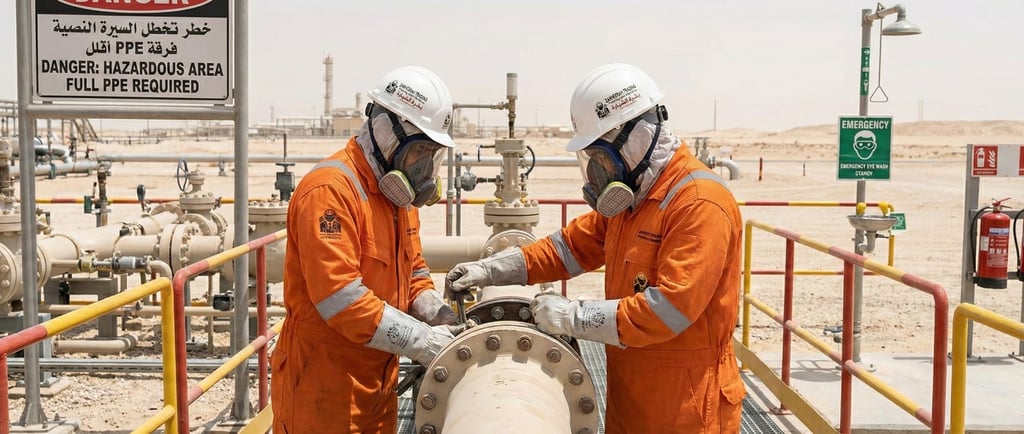
Workers follow safety rules in Qatar’s hazardous industrial environments for protection
Safety in Hazardous Environments in Qatar – Worker Protection Checklist
Hazards are a part of everyday operations in Qatar’s industrial, construction, and oil & gas sectors. Whether it’s chemical spills, toxic gases, heavy machinery, or extreme heat, workers face risks that require strong safety systems. Ensuring safety in hazardous environments in Qatar is not just a legal requirement—it is a responsibility of every employer and worker on-site.
This complete guide explains the major hazards, essential safety practices, required PPE, and a practical protection checklist that improves workplace safety across Qatar.
Understanding Hazardous Environments in Qatar
A hazardous environment refers to any workplace where the chances of injury, illness, or accidents are higher due to dangerous conditions. In Qatar, such environments are common in:
Oil and gas fields
Construction sites
Factories and industrial plants
Power plants
Marine and port operations
Chemical handling facilities
These environments expose workers to risks such as fire, toxic fumes, chemical burns, heat stress, falls from height, and confined spaces with low oxygen levels.
Why Hazardous Environment Safety Matters in Qatar
Qatar follows strict regulations to ensure worker safety, including:
Ministry of Labour regulations
QatarEnergy (Qatar Petroleum) safety standards
Qatar Construction Specifications (QCS)
Good safety management helps companies:
Prevent accidents
Reduce worker injuries
Avoid legal penalties and fines
Improve productivity
Build a strong safety culture
A safe worksite is not only compliant—it’s more efficient and trusted.
Common Hazards in Qatar’s High-Risk Workplaces
Workers operating in hazardous areas may face:
1. Chemical Exposure
Acids, solvents, and industrial chemicals may cause burns, respiratory problems, or poisoning.
2. Flammable or Explosive Atmospheres
Oil and gas plants often contain hydrocarbons, vapors, and combustible dust.
3. Extreme Heat and Humidity
Heat stress is a major concern in Qatar’s summer months.
4. Noise Pollution
Heavy machinery and equipment can cause hearing damage.
5. Confined Spaces
Tanks, vessels, and underground areas may have low oxygen or toxic gases.
6. Mechanical and Equipment Hazards
Cranes, forklifts, grinders, and welding equipment can cause severe injuries.
Essential Safety Practices for Hazardous Environments
To maintain a safe workspace, Qatar’s industries follow structured safety processes:
1. Regular Risk Assessments
Before work begins, supervisors must identify hazards and eliminate or reduce them.
2. Clear Safety Signage
Warning signs help workers understand danger zones at a glance.
3. Emergency Preparedness
This includes:
Fire extinguishers
Spill kits
First-aid stations
Eyewash and emergency showers
4. Ventilation and Gas Detection
Especially important for confined spaces and chemical storage areas.
5. Permit to Work (PTW) System
Used for high-risk tasks such as welding, electrical work, confined space entry, and working at height.
Mandatory PPE for Hazardous Environments in Qatar
Personal Protective Equipment is the last line of defense. The following PPE is commonly required:
1. Safety Helmets
Protect against falling objects and head injuries.
2. Eye and Face Protection
Goggles, face shields, and welding masks depending on the task.
3. Respiratory Protection
Dust masks
Half-face respirators
SCBA (Self-Contained Breathing Apparatus) for confined spaces and gas leaks
4. Protective Clothing
Fire-resistant (FR) coveralls are essential in oil & gas and hot work activities.
5. Hand Protection
Chemical-resistant, cut-resistant, or heat-resistant gloves.
6. Safety Footwear
Steel-toe boots with anti-slip and oil-resistant soles.
7. Hearing Protection
Earplugs or earmuffs for high-noise areas.
Proper PPE usage can significantly reduce injuries and fatalities.
Worker Protection Checklist (Qatar-Ready)
This checklist ensures maximum safety in hazardous environments:
✔ Pre-Shift Safety Measures
Conduct toolbox talk
Inspect PPE for damage
Check gas detection readings
Confirm ventilation is working
Verify emergency exits are open
✔ During Work
Follow Permit to Work procedures
Stay inside designated safe zones
Keep chemicals stored correctly
Use fall protection when required
Maintain communication with supervisors
✔ After Work
Dispose of waste safely
Clean and store PPE
Report any hazards observed
Complete end-of-day safety log
A consistent checklist keeps teams aligned and reduces the chance of accidents.
Building a Safety Culture in Qatar
Safety is not just about equipment—it’s about behavior. Companies in Qatar can build a strong safety culture by:
Training workers regularly
Encouraging hazard reporting
Rewarding safe practices
Ensuring supervisors lead by example
When every worker understands the risks and follows protocols, safety becomes a natural part of daily operations.
Conclusion
Hazardous environments are unavoidable in many industries across Qatar, but workplace accidents are preventable. With proper PPE, safety training, risk assessments, and a strong commitment to following compliance rules, companies can ensure that every worker returns home safely.
By following this checklist and understanding the specific hazards, you can maintain complete safety in hazardous environments in Qatar—today and every day.
Safety
Your trusted supplier of quality safety equipment.
Contact
Service
info@zakheerah.qa
© 2025. All rights reserved.
CR No: 194474